
The Trump administration’s sweeping tariff strategy is beginning to show measurable gains for American agriculture, according to its top trade negotiator, who says the policy has sharply reduced the nation’s agricultural trade deficit and will remain a central pillar of U.S. economic policy.
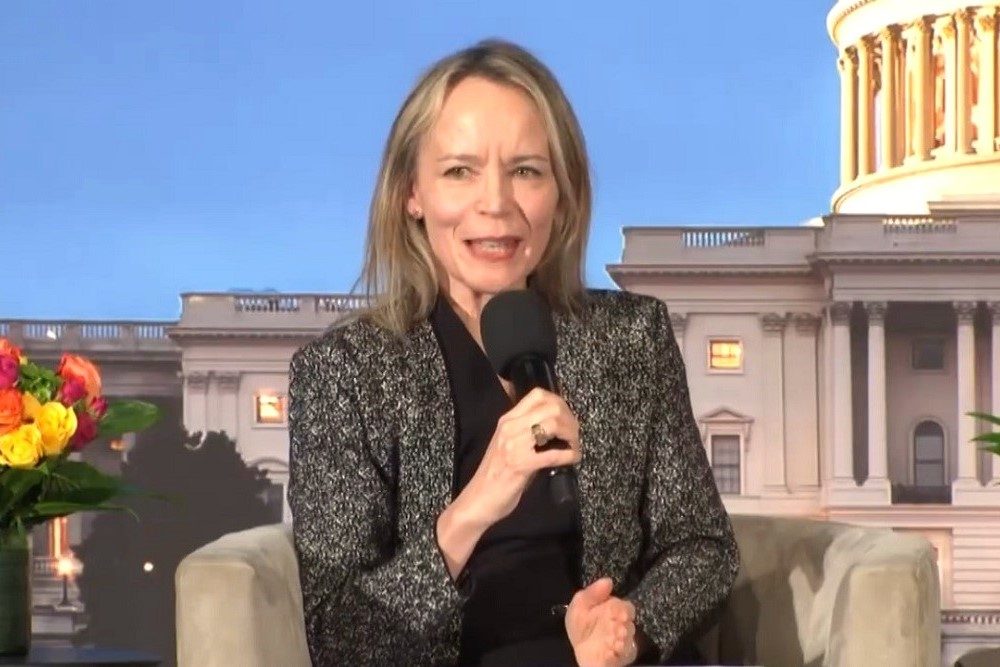
“For agriculture negotiations, the reciprocal tariffs truly have been a game changer for us,” said Julie Callahan, Chief Agricultural Negotiator with the Office of the U.S. Trade Representative (USTR), speaking earlier this week at a trade symposium at the University of Nebraska.
Callahan pointed to a marked shift in the nation’s trade balance as evidence of progress.
“If you look at January of 2025, that month alone the United States had a $6.5 billion agricultural trade deficit with the world. If you look at January of 2026, so one year later, the ag trade deficit was $1.75 billion. So, there is evidence that the policies that have been in place for a year are actually resulting in tangible benefits.”
Taken over the course of the year, the administration estimates its approach has reduced the agricultural trade deficit by roughly $4.75 billion, reversing what officials had warned could become a sustained imbalance. The United States, long a dominant agricultural exporter, had seen its surplus erode in recent years, raising concerns among policymakers and farm groups alike.
“We were projected to have a continually ballooning agricultural trade deficit, despite in the past having a very substantial agricultural trade surplus,” she said. “We are a powerhouse of ag producers. There is no reason why we should have a spiraling agricultural trade deficit. My fixation—I will admit, it is a fixation—is to get back to reciprocity in agriculture.”
Callahan emphasized that restoring “reciprocity” in trade relationships remains a guiding objective of the administration’s strategy, even as the legal footing of some tariffs has come under pressure.
“We still have the Section 122 tariffs that are in place, so we have not slowed down in terms of our negotiations with trading partners. So, while there are a number of legal authorities for the President to impose tariffs, the tools may change, the legal mechanism for the tariffs may change, but our trade policy has been and still remains consistent,” said Callahan.
The administration’s claims are likely to face continued scrutiny from economists and trading partners, particularly as questions linger over the long-term effects of tariffs on global supply chains and domestic prices. For now, officials argue the early data underscores a significant shift in U.S. agricultural trade dynamics.
Overall, the administration is making the case that its tariff-driven approach has delivered measurable improvements in the agricultural trade balance and strengthened the position of American farmers, and it intends to continue pursuing that strategy despite legal challenges and ongoing debate over its broader economic impact.
CLICK BELOW for Michigan Ag Today’s radio news report: