
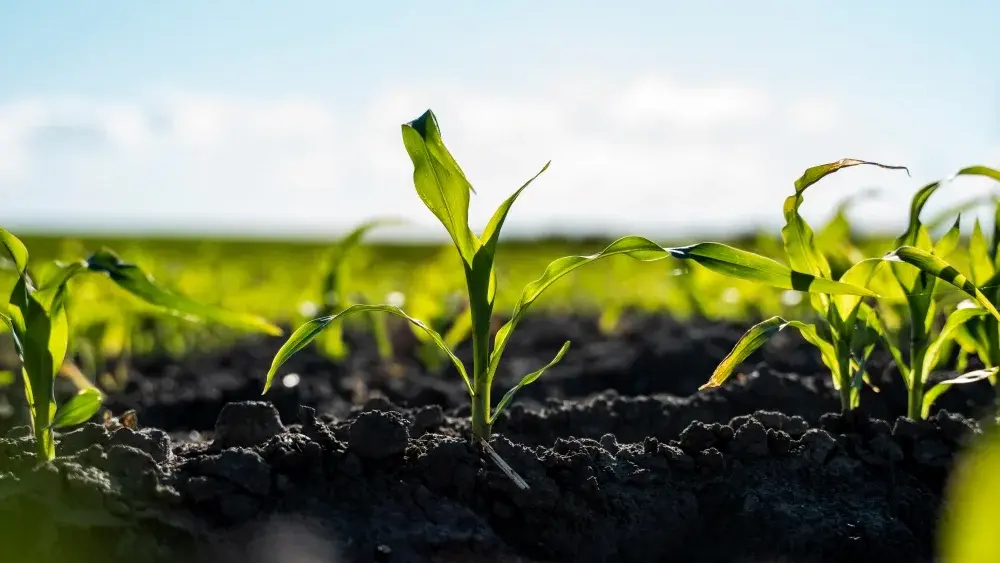
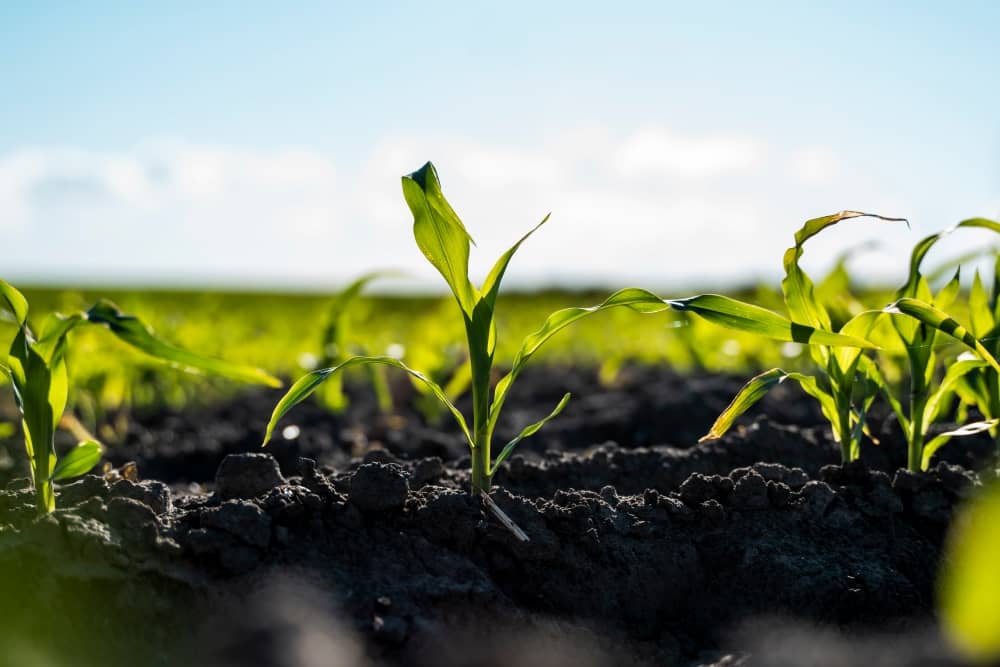
Beneath the dark, freshly turned soil of Midwestern cornfields, a quiet but consequential process is unfolding—one that farmers rarely see but closely monitor for signs of success or trouble ahead.
Agronomists say the stretch between planting and emergence is among the most vulnerable phases of a corn crop’s life cycle, when a delicate interplay of moisture, temperature and timing determines whether seeds will thrive or fail. Understanding that sequence, they argue, can mean the difference between a uniform stand and uneven yields months later.
The process begins with water. A corn kernel must absorb roughly 30 percent of its weight in moisture before germination can even start. If the soil dries out too soon, development stalls. If it repeatedly cycles between wet and dry, the seed itself can die before ever taking root. For growers, that makes planting into consistent soil moisture less a matter of convenience than necessity.
Once that threshold is met, temperature takes over as the primary driver. Corn requires about 115 to 120 growing degree days to emerge, a measure that translates loosely into accumulated warmth over time. In soils averaging 75 degrees Fahrenheit, seedlings can break through the surface in as little as four days. At 50 degrees—the commonly accepted lower limit for planting—that same process can stretch to more than a month.
That delay carries risk. Seeds lingering in cold, saturated soil remain exposed to pathogens, insect pressure and residual herbicides, increasing the likelihood of poor establishment. Warmer conditions, by contrast, compress the timeline and reduce those vulnerabilities.
Even so, the sequence of development remains consistent. The first sign of life is the radicle root, which emerges from the kernel tip and begins anchoring the plant. Next comes the coleoptile, a protective sheath that pushes upward through the soil, shielding the young leaves inside until they reach the surface. Finally, lateral seminal roots develop, forming a temporary system that sustains the seedling until more permanent nodal roots take over.
The timing of those stages, however, can vary widely depending on field conditions. In warm soils, they may unfold almost simultaneously. In colder environments, each step can be separated by days or even weeks.
For farmers scouting their fields, those differences can offer critical clues. A kernel showing a short radicle but no emerging shoot may simply be progressing slowly, not failing. But the absence of any development after two weeks could point to deeper issues, from inadequate moisture to poor seed quality.
In a season when margins are tight and weather patterns increasingly erratic, such early signals can shape decisions that ripple through the rest of the growing year—long before the first rows of green appear above ground.
Source: Dan Quinn and Jeferson Pimentel, Purdue Extension