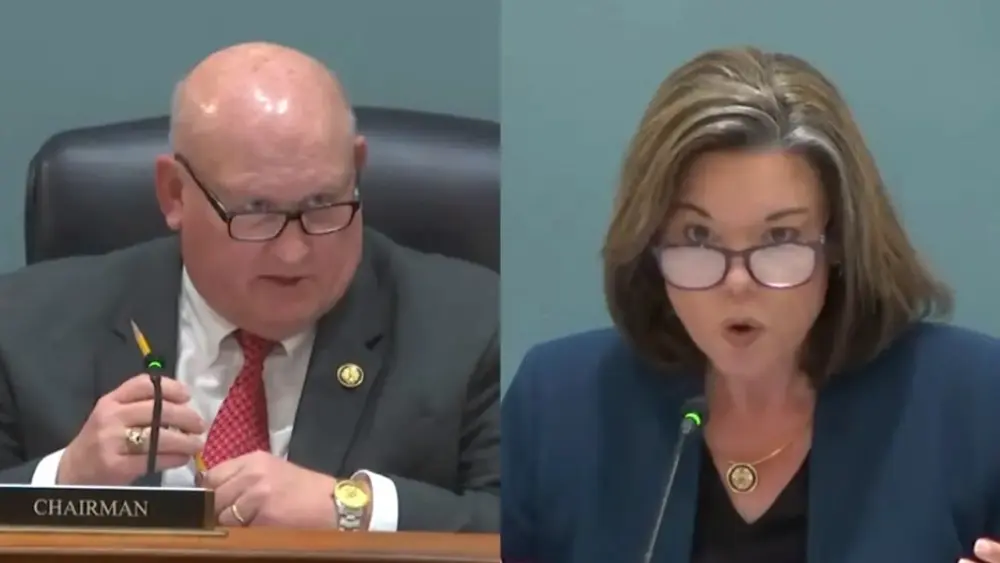

After more than 20 hours of debate and partisan sparring, the House Agriculture Committee advanced Farm Bill 2.0 in the early hours of Thursday morning. The legislation cleared the committee on a 34–17 vote — with all Republicans and seven Democrats in support — sending the Farm, Food and National Security Act of 2026 to the House floor as farm groups and ag leaders quickly lined up behind it.
Randy Kron, President of Indiana Farm Bureau:
“Thank you to members of the House Agriculture Committee, especially Indiana’s own Reps. Jim Baird and Mark Messmer, for their work in passing the Farm, Food and National Security Act out of committee. Although this is an encouraging step forward to finally get the rest of the farm bill priorities across the finish line, we still need it to receive a floor vote in the House. Indiana Farm Bureau urges Congress to keep the momentum going for the sake of Hoosier farmers and all those who benefit from the food, fuel and fiber they produce.”
Zippy Duvall, President of the American Farm Bureau Federation:
“Farm Bureau appreciates the leadership of Chairman Thompson and applauds supportive members of the committee on both sides of the aisle for recognizing that a new farm bill is critical as farmers face headwinds not seen in a generation. The farm bill has a ripple effect across the country by supporting the farmers who grow the food that stocks every kitchen pantry in America.
“We urge House leaders to continue the momentum and bring this important legislation to a vote on the floor. Farmers understand there are many competing priorities in our country right now, but so much has changed since Congress last updated the farm bill in 2018. Agriculture has endured a pandemic, runaway inflation, rising interest rates, and historic supply chain and market disruptions. Costs for fuel, fertilizer, equipment, and labor have surged, and margins have narrowed. The pressure on farm families has intensified so much that we’ve lost more than 175,000 farms since 2017. That’s just heartbreaking.
“Farmers are also counting on the Senate Agriculture Committee to follow suit and schedule a farm bill markup soon. This is an opportunity for both chambers to work on a bipartisan basis to do the right thing – not only for farmers, but for every family that depends on them. We call on members of Congress to step up and say yes to a strong U.S.-grown food supply.”
Scott Metzger, President of the American Soybean Association (ASA):
“We are grateful to Chairman Thompson for his leadership and tireless work to champion the advancement of a full, five-year farm bill over these past several years. Soybean farmers are facing major headwinds, and the provisions included in this 2026 Farm Bill will help farmers across the country navigate changing market dynamics and ongoing farm production and economic challenges. We sincerely appreciate the bipartisan members of the House Agriculture Committee who voted to advance the Farm, Food, and National Security Act of 2026 and continue to stand up for U.S. agriculture.”
Jed Bower, President of the National Corn Growers Association (NCGA):
“We are pleased to see that the House Committee on Agriculture has advanced the 2026 Farm Bill, which builds upon the One Big Beautiful Bill Act’s investments in agriculture and addresses additional programs and policies important to corn growers. Highlights for NCGA in the legislation include provisions in the credit, conservation, rural development, research and energy titles.”
“We congratulate Chairman Thompson for his persistence in moving the Farm Bill an important step further and appreciate Ranking Member Craig for her leadership. We now urge the House and Senate to work in a bipartisan way to ensure a Farm Bill 2.0 is considered and passed in both chambers as soon as possible.”
“We also recognize Rep. Budzinski for offering an amendment requiring a mandatory base acre update that would better reflect corn growers’ priorities for commodity program eligibility. We acknowledge the efforts of Rep. Sorenson, who introduced an amendment that would allow for the year-round sale of E15. While these amendments were not ultimately adopted, NCGA will continue working with Congress as the legislative process continues.”
Duane Stateler, President of the National Pork Producers Council (NPPC):
“Pork producers of all shapes and sizes need this regulatory relief and are grateful for Chairman Thompson’s steady commitment to providing relief from state laws outside our borders. Now, it is up to the full House of Representatives to finish the job: pass this farm bill and give agricultural producers across the country true freedom to farm.”
Ethan Lane, Senior Vice President of Government Affairs for the National Cattlemen’s Beef Association (NCBA):
“The provisions included in the Farm, Food, and National Security Act build upon the legislative successes in the Farm Bill title of the One Big Beautiful Bill for American cattle producers. This legislation finally completes the Farm Bill cycle and gives producers the operational tools and programmatic investments they need. NCBA thanks Chairman Thompson and House Agriculture Committee members for passing this crucial legislation for rural America.”
Jamie Kress, President of the National Association of Wheat Growers (NAWG):
“NAWG thanks Chairman Thompson for his leadership in moving the Farm, Food, and National Security Act of 2026 forward. Wheat farmers continue to face rising supply costs, low commodity prices, and uncertainty in global markets. We applaud the Committee’s work and bipartisan support to provide much-needed certainty.
“But Congress’ farm bill work has just begun. NAWG encourages Speaker Johnson to bring the farm bill to House floor and we call on Members of Congress to support its passage. By advancing this legislation, Congress can address key priorities for wheat farmers including modernizing the Farm Credit title, permanently transferring Food for Peace to USDA, strengthening trade promotion programs, reauthorizing CRP, and ensuring science-based labeling for crop protection tools. These provisions matter to farmers across the country, and we look forward to working together with the House and Senate to get them across the finish line.”
Duane Simpson, President & CEO of the National Council of Farmer Cooperatives (NCFC):
“Completion of the House Agriculture Committee’s farm bill markup is an important step toward delivering the certainty and stability America’s farmers and their co-ops need. With producers facing a challenging farm economy and continued market volatility, a new farm bill is long overdue.
“We appreciate the work of Chairman Thompson and members of the committee in advancing this legislation. We urge House leadership to bring up the farm bill without delay and look forward to the Senate Agriculture Committee beginning its process in the coming weeks.
“We also would like to extend a special thanks to Rep. Dusty Johnson (R-S.D.) for his leadership in including a provision that would enhance the ability of farmer cooperatives to access the Rural Energy for America Program. If enacted, it would help cooperatives pursue projects that would provide significant impacts toward lowering energy consumption and cutting costs.”